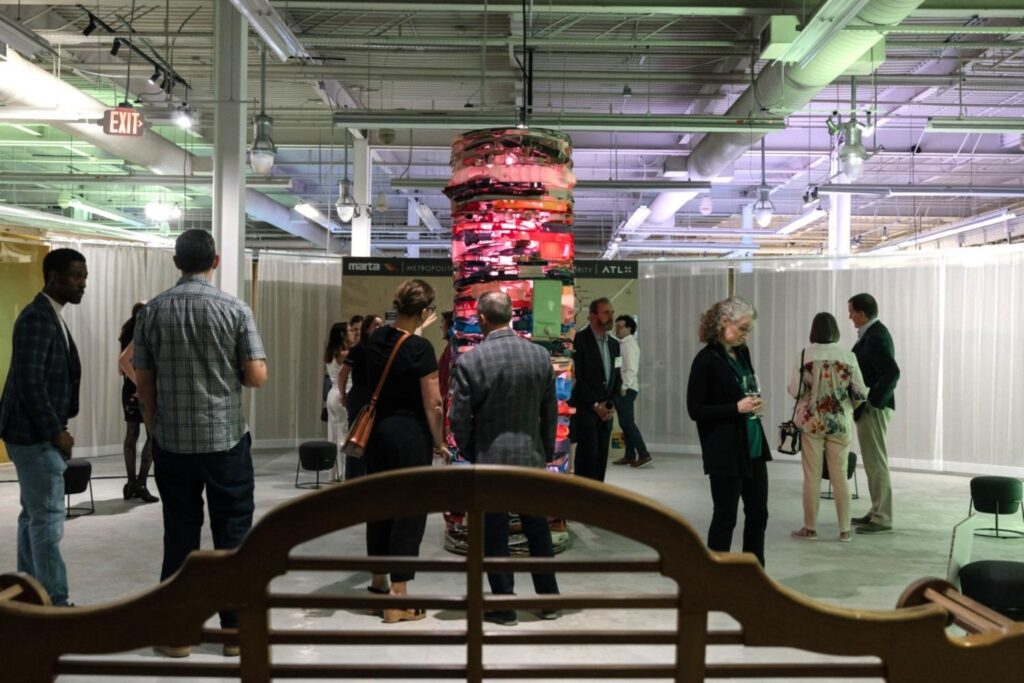
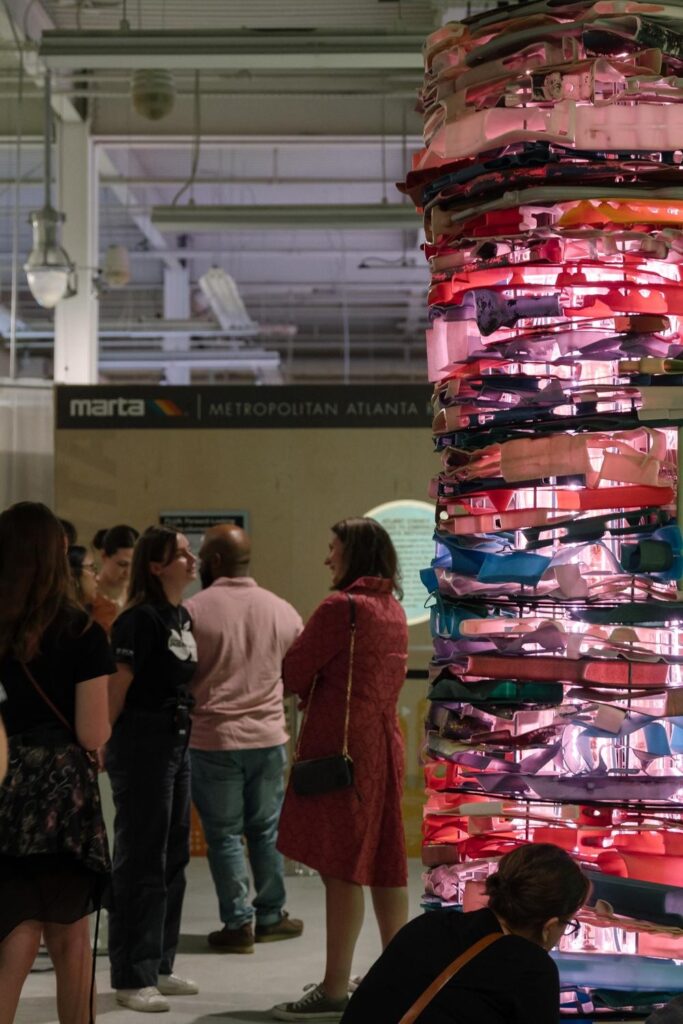
Climate Beacon is our bioreactor; a vessel for growing organisms under controlled conditions to yield biproducts. Inside the exterior plastic column is a series of acrylic tubes filled with water and algae. Our bioreactor cultivates micro-algae by pumping the gallery air through tubes, feeding the algae important nutrients such as carbon dioxide exhaled from visitors. The data from an interior carbon sensor reads the gallery’s atmospheric carbon dioxide levels informing the light display to change. The lights within our bioreactor function to both visualize the amount of carbon dioxide in the gallery atmosphere as well as help the algae photosynthesize. Algae can double its mass in 24 hours. Periodically, we harvest the algae biomass, the biproduct of our bioreactor, to sequester the carbon as compost and add in new water to continue the bioreaction process. Sequestration affixes the carbon to prevent its release back into the atmosphere. Climate Beacon uses direct air carbon capture to mitigate the effects of increased atmospheric carbon.
How Does Climate Beacon Function?
Building Climate Beacon
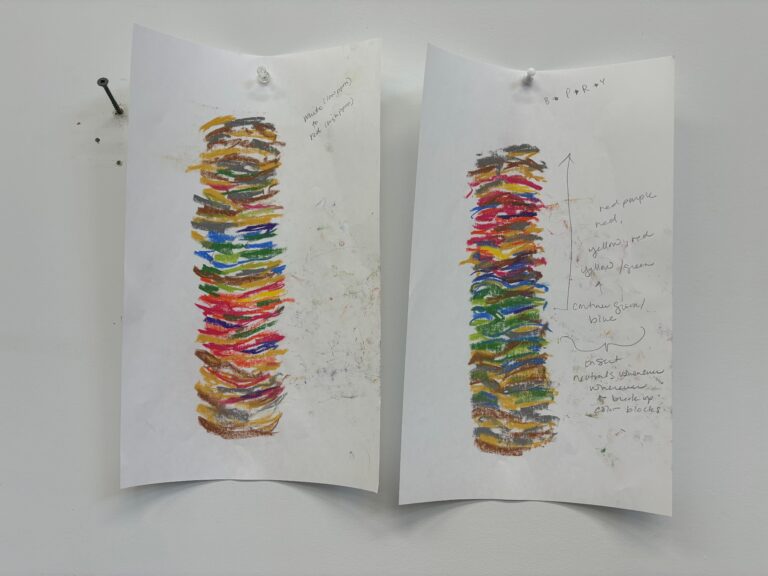
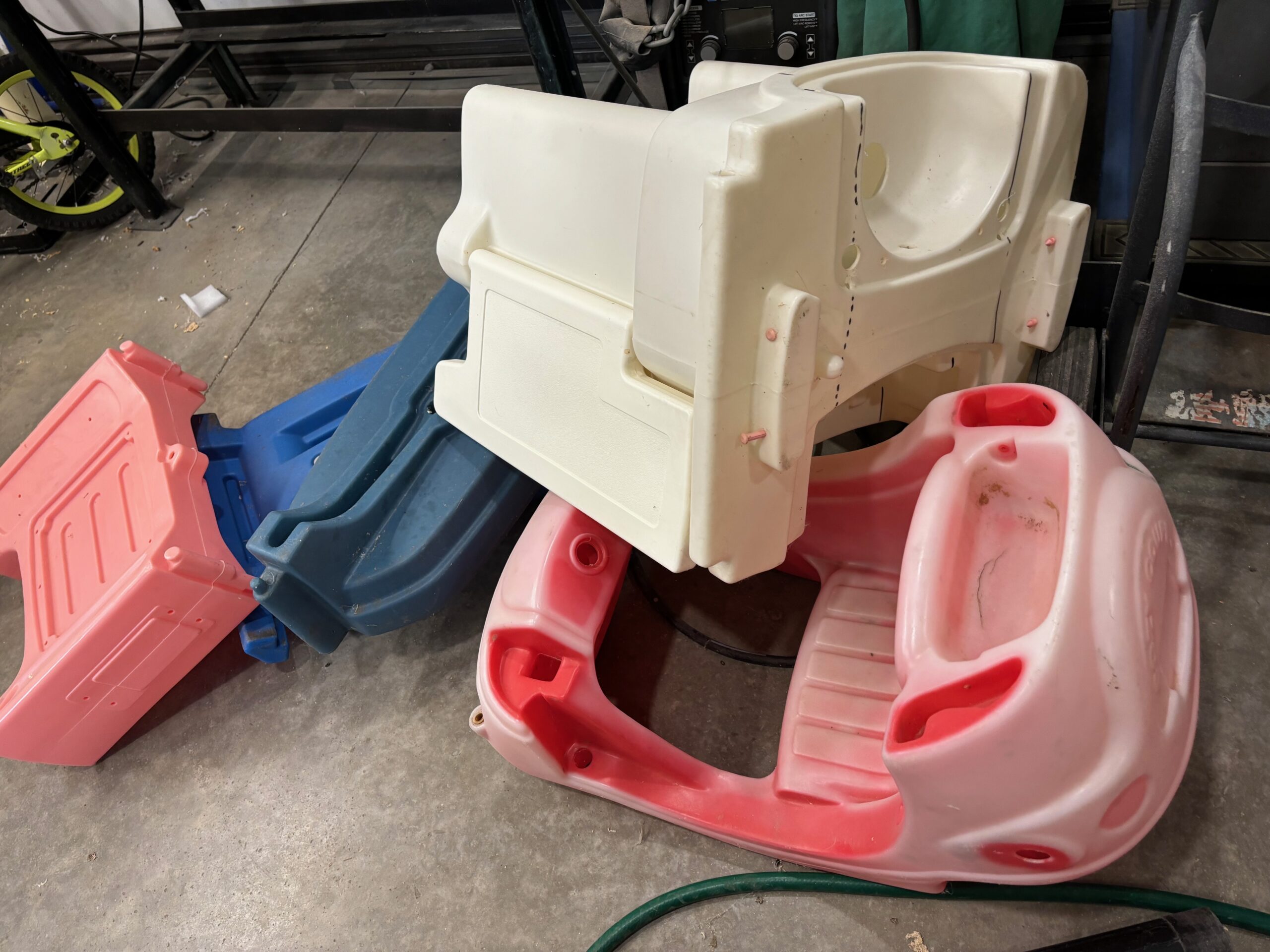
The exterior of Climate Beacon is constructed from discarded outdoor children’s toys. Each panel of a climbing structure, picnic table, or playhouse is washed, stenciled, cut, drilled, and aligned to create a column resembling a colorful core sample of earth’s layers. Plastic toys are used because of their material strength, but also as a way to reduce and reuse materials otherwise thrown in a landfill.
The visual idea of a core sample relates to the methods of storage in earth’s strata including- coal seams, diamonds, landfill layers, and fossil fuels.
Inside the exterior constructed column is a series of acrylic tubes filled with water, algae, sensors, and computers.